






Introduction
A gillingham shopping center emergency doesn’t give warnings or second chances. It hits fast, and in those first moments, everything depends on how people react—not just systems, not just planning, but human behavior under pressure. That’s where things either hold together or start falling apart.
Why a gillingham shopping center emergency feels more chaotic than it should
There’s a belief that modern shopping centers are controlled environments. Cameras, security teams, structured layouts—it all creates a sense of order. But the moment a gillingham shopping center emergency unfolds, that sense of control gets tested immediately.
The problem is simple. People inside the building don’t know each other, don’t know the exits well, and don’t share the same awareness level. One person reacts instantly, another freezes, and a third ignores the situation completely. That mix creates confusion before any official response even begins.
During a real gillingham shopping center emergency, that confusion spreads faster than the actual threat.
The real incident that changed perception
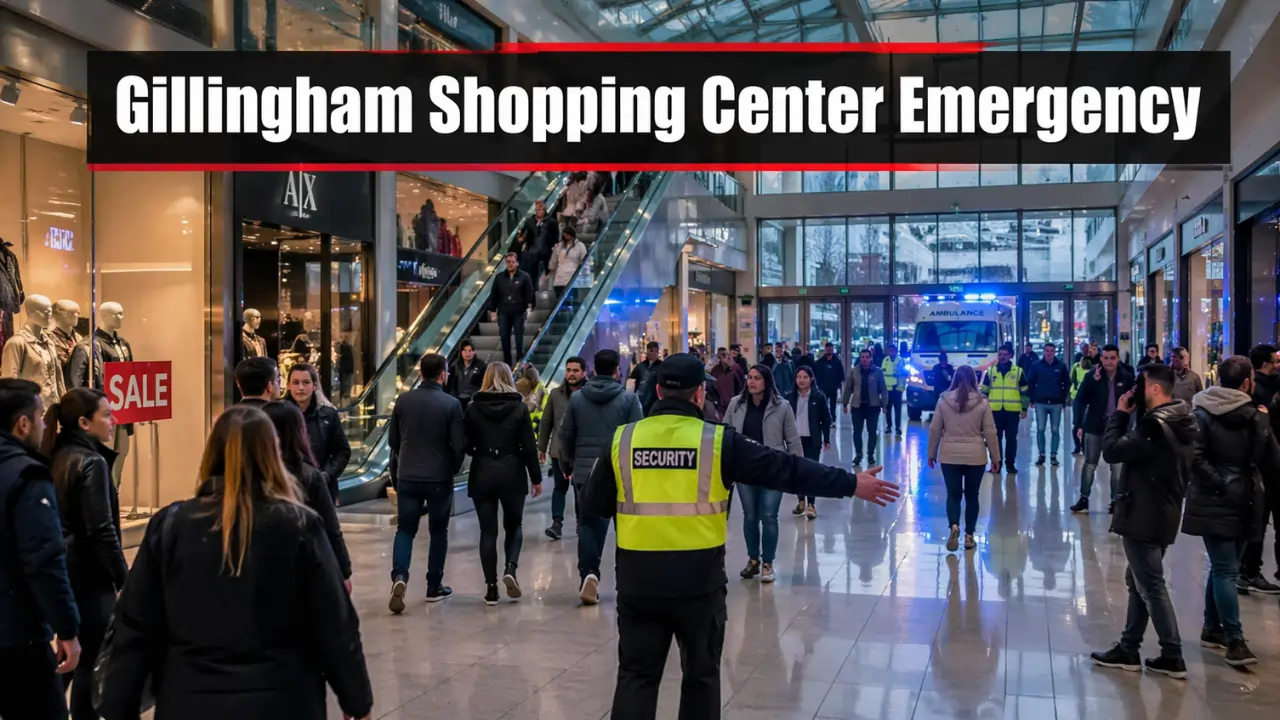
A widely discussed gillingham shopping center emergency involving a fatal medical situation in a busy retail area forced people to look beyond surface-level safety claims. Emergency responders arrived quickly, but the outcome had already been shaped by what happened before they got there.
Witnesses didn’t describe chaos in the dramatic sense. They described hesitation. People unsure whether to step in. Shoppers watching instead of acting. That quiet delay is where situations become irreversible.
That incident made one thing clear: response time doesn’t start when ambulances arrive. It starts the second something goes wrong.
The hidden delay that costs lives
Every gillingham shopping center emergency has a gap between the moment something happens and the moment coordinated action begins. That gap is often filled with uncertainty.
People ask questions instead of moving.
They wait for confirmation instead of reacting.
They assume someone else will take control.
Those seconds matter more than most people realize.
Why communication systems don’t always work
Announcements sound good in theory. In practice, they often fail to guide behavior during a gillingham shopping center emergency.
Background noise, unclear wording, and disbelief all play a role. If a message isn’t instantly understood, people ignore it. Worse, they interpret it differently.
What actually works is visible authority. When trained staff step in and give direct instructions, people respond faster. Without that human layer, even the best system struggles to control movement.
People trust people, not speakers
In a gillingham shopping center emergency, shoppers don’t look up at speakers—they look around. They follow body language, tone, and urgency from those nearby.
If staff appear confident, crowds stabilize. If staff hesitate, uncertainty spreads. That dynamic is immediate and hard to reverse once it starts going the wrong way.
Medical emergencies are the most overlooked risk
Fire alarms get attention. Security alerts create tension. But a medical situation often goes unnoticed until it becomes serious. That’s why many gillingham shopping center emergency cases involve health-related incidents that escalate quickly.
Cardiac arrest is the clearest example. Immediate action can save a life. Delay reduces survival chances sharply. Yet most people don’t act because they’re unsure what to do.
Even when equipment like defibrillators is available, hesitation becomes the biggest obstacle.
The difference between presence and action
Having safety equipment inside a shopping center doesn’t guarantee it will be used effectively during a gillingham shopping center emergency. What matters is whether someone steps forward without waiting.
That willingness is rare under pressure, and that’s the real issue.
Evacuation mistakes that make situations worse
People assume leaving the building is always the safest option. That instinct can backfire during a gillingham shopping center emergency.
If everyone moves at once without direction, exits become crowded. Movement slows. Panic builds. In some cases, staying in place would have been safer.
The problem isn’t evacuation itself. It’s uncoordinated movement. When individuals act independently, they create problems that didn’t exist moments before.
Following the crowd is not always smart
During a gillingham shopping center emergency, crowds don’t always move toward safety. They move toward familiarity. That could be the entrance they came from, not the nearest exit.
This behavior creates congestion in the wrong places and delays escape routes that are actually safer.
The role of staff under pressure
Staff performance shapes how a gillingham shopping center emergency unfolds. Training matters, but execution matters more.
In real situations, there’s no time to recall manuals. Decisions are made instantly. Tone of voice, posture, and clarity all influence how people react.
A confident staff member can stabilize a situation quickly. An uncertain one can unintentionally escalate it.
That difference isn’t theoretical. It shows up in real incidents again and again.
What keeps going wrong in these situations
The pattern is consistent across every gillingham shopping center emergency:
People hesitate
Instructions aren’t always clear
Crowds act independently
Early moments are unstructured
None of these issues are new. They repeat because they come from human behavior, not system failure alone.
That’s why improvements are difficult. You can upgrade systems, but you can’t fully control how people react.
The gap between planning and reality
Every shopping center has procedures for a gillingham shopping center emergency. The challenge is that real situations don’t follow procedures perfectly.
Unexpected factors appear. Timing shifts. People behave unpredictably.
The gap between what’s planned and what actually happens is where most problems begin.
What actually changes after an incident
After a serious gillingham shopping center emergency, internal reviews happen. Staff are briefed. Systems are checked. But visible changes are often limited unless the incident draws public attention.
That creates a cycle. Lessons are learned quietly, but not always implemented in a way the public can see or feel.
Until the next incident forces attention again.
The uncomfortable truth people avoid
The next gillingham shopping center emergency won’t feel obvious when it starts. It will feel uncertain, confusing, and easy to ignore for a few seconds too long.
That delay is the real risk.
People assume they will react quickly. In reality, most wait. They look around. They try to understand instead of act. And in critical situations, that hesitation changes outcomes.
Conclusion
A gillingham shopping center emergency reveals how much depends on human decisions in the first few moments. Systems help, but they don’t lead—people do. The difference between control and failure often comes down to who acts first, who gives direction, and who chooses not to wait. If there’s one thing worth remembering, it’s this: hesitation is the most dangerous response in any public emergency.
FAQs
1. What should I do first if I notice something wrong in a shopping center?
Act immediately based on what you see. Alert staff, call for help, and don’t wait for others to react before you do something useful.
2. Are staff trained to handle every type of emergency?
They are trained for common scenarios, but real situations can still challenge them. Their reaction depends on experience and confidence in the moment.
3. Is it safe to use elevators during an emergency?
No, elevators can become unsafe or stop working. Stairs are the safer option in most cases.
4. Why do people hesitate during emergencies?
Uncertainty and fear of making the wrong decision slow people down. Most people wait for confirmation instead of trusting their instincts.
5. Can one person really make a difference in such situations?
Yes. Early action from even one person can change how others respond and improve the overall outcome.
Read More: Fraudee: Real Triggers, Trust and Urgency Patterns, and Hidden Risks in Online Scams