










Introduction
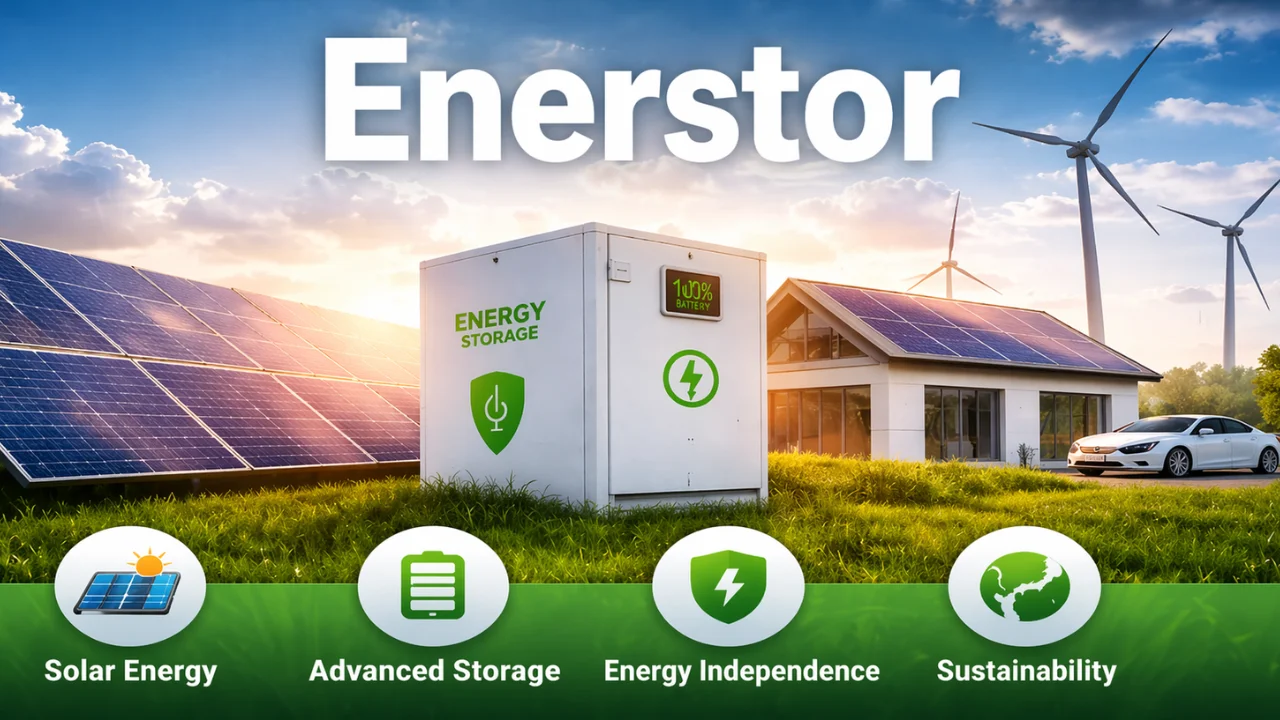
Most energy systems fail at the same point: timing. Power is generated when it’s available, not when it’s needed. That gap creates waste, high costs, and instability. enerstor fixes that imbalance in a way that’s practical, not theoretical.
Why enerstor matters more than power generation
There’s too much focus on producing electricity and not enough on managing it. Solar panels and wind turbines are useless if the energy they generate can’t be used at the right time.
enerstor shifts control back to the user.
Instead of depending on real-time supply, energy can be stored and released when it actually matters. That single shift changes how homes, businesses, and entire grids operate.
Without enerstor, renewable energy remains inconsistent. With it, energy becomes predictable.
How enerstor works in real conditions
Energy capture and storage cycle
The process is simple but effective. Energy is collected from a source—solar panels, grid electricity, or industrial systems—and stored for later use.
That stored energy isn’t idle. It’s reserved for moments when demand spikes or supply drops.
Controlled release during peak demand
This is where enerstor proves its value. Instead of drawing expensive electricity during peak hours, stored energy is used instead.
In homes, this means running appliances at night without relying heavily on the grid. In factories, it means avoiding massive power spikes during production cycles.
That control reduces both cost and risk.
enerstor in residential setups
Homeowners are starting to treat energy differently. It’s no longer just about consumption—it’s about control.
A solar-powered home without enerstor still depends heavily on the grid after sunset. Add enerstor, and the equation changes.
Energy generated during the day is stored and used later. That reduces reliance on external supply and protects against outages.
The biggest advantage isn’t just savings. It’s consistency. Power becomes reliable instead of unpredictable.
Industrial use of enerstor is where real impact shows
This is where enerstor moves from useful to essential.
Factories don’t just consume energy—they depend on stability. Even a short disruption can stop production, damage equipment, or cause financial loss.
enerstor systems act as a buffer between the grid and operations.
Load balancing in production environments
Instead of pulling massive energy during peak operation hours, factories can rely on stored power. This keeps demand stable and avoids penalties from utility providers.
Protection against power disruptions
When the grid fails or fluctuates, enerstor keeps systems running long enough to prevent shutdowns or damage.
That reliability is often more valuable than cost savings.
Grid-level enerstor is reshaping power infrastructure
At a larger scale, enerstor plays a different role.
Power grids are under pressure. Demand keeps rising, while renewable sources introduce variability. This creates instability that traditional systems struggle to handle.
enerstor acts as a stabilizer.
Large storage systems absorb excess energy when demand is low and release it when demand increases. This reduces strain on power plants and prevents overload scenarios.
Major companies are already investing heavily in this space. Foxconn’s EnerStor platform is one example of how serious this shift has become.
This isn’t experimental anymore. It’s infrastructure.
The financial reality of enerstor adoption
Let’s be honest—enerstor isn’t cheap upfront.
High-capacity systems require investment, and the return depends on how energy is used.
For heavy users like factories or commercial buildings, the payoff is clear. Lower peak charges and reduced downtime quickly justify the cost.
For smaller households, the return is slower. But in areas with unstable electricity or rising tariffs, enerstor still makes sense over time.
The key factor isn’t price. It’s usage pattern.
Limitations that should not be ignored
enerstor solves real problems, but it’s not perfect.
Battery degradation is unavoidable. Over time, storage capacity declines. That needs to be factored into long-term planning.
Space requirements can also be an issue, especially for larger systems.
And not every setup benefits equally. Installing enerstor without understanding energy usage leads to poor results.
The difference between a smart investment and a wasted one comes down to planning.
Where enerstor is heading next
The next stage isn’t just about storing more energy. It’s about using it smarter.
Advanced systems are starting to integrate software that tracks usage patterns and adjusts storage behavior automatically.
Instead of manually controlling energy use, systems can respond in real time—charging when rates are low and discharging when demand peaks.
This shift will push enerstor from a passive tool to an active system.
As renewable energy adoption increases, this kind of intelligence becomes necessary, not optional.
Why enerstor is becoming unavoidable
Energy demand is rising. Power grids are under pressure. Renewable sources are inconsistent.
These problems aren’t going away.
enerstor sits in the middle of all three and offers a practical fix. It doesn’t replace energy generation—it makes it usable.
That’s why adoption is growing quietly but steadily.
Once it becomes standard in infrastructure and construction, it won’t feel like an upgrade anymore. It will feel like a requirement.
Conclusion
enerstor isn’t about storing electricity—it’s about controlling it.
That control changes how energy is priced, delivered, and used. It reduces uncertainty and gives both individuals and businesses more stability.
Ignore enerstor, and energy will always feel unpredictable. Use it properly, and energy becomes something you manage instead of react to.
FAQs
1. Can enerstor completely replace grid electricity?
No. enerstor reduces dependence on the grid, but most systems still rely on it as a backup or supplemental source.
2. How quickly can enerstor reduce electricity bills?
It depends on usage. High-consumption users may see results within months, while smaller households take longer.
3. Is enerstor useful in areas with frequent power outages?
Yes. It provides backup power and keeps essential systems running during outages.
4. Does enerstor require regular maintenance?
Minimal maintenance is needed, but system checks and monitoring help maintain performance over time.
5. What type of users benefit most from enerstor?
Industrial operations, commercial buildings, and high-energy households gain the most value due to consistent usage patterns.