










Introduction
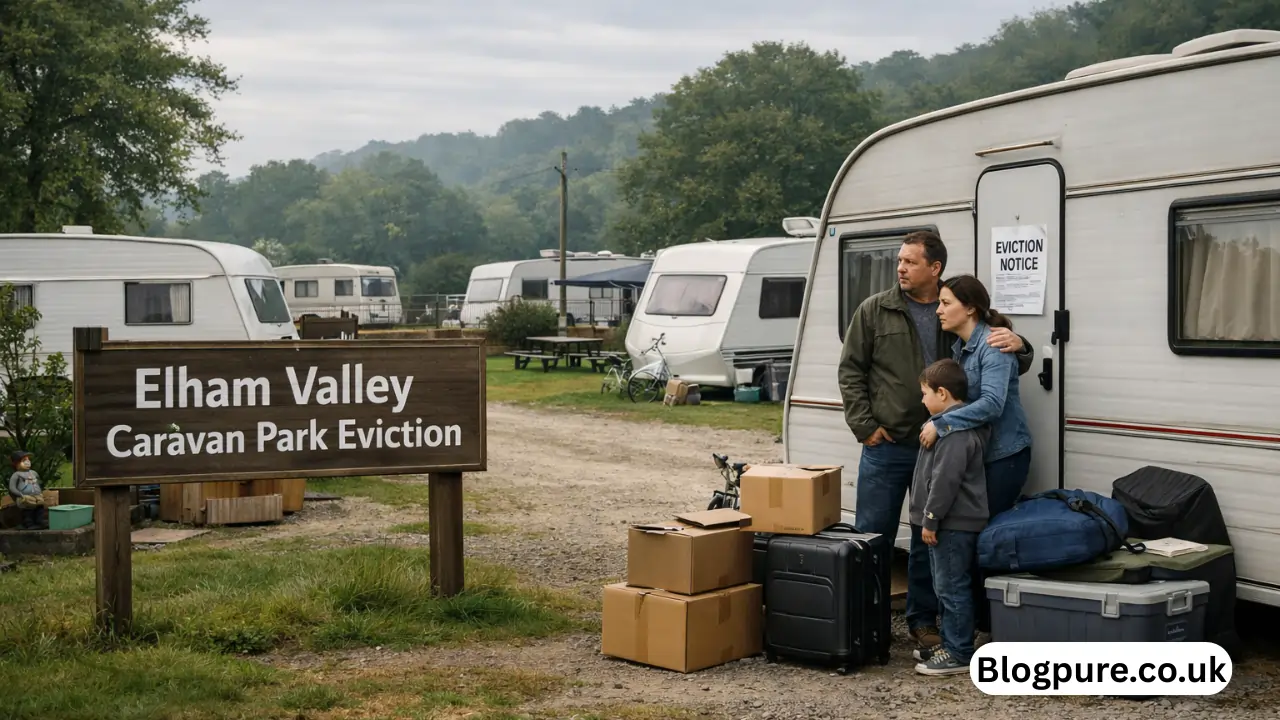
The elham valley caravan park eviction didn’t come out of nowhere. It was the result of years of quiet neglect, tolerated loopholes, and a housing system that keeps pushing people into places never designed for permanent living. When the eviction finally hit, it wasn’t just sudden—it was brutally efficient.
How a temporary site turned into a long-term home
What makes the elham valley caravan park eviction stand out is how ordinary the beginning looked. The site was set up as a leisure caravan park, meant for short stays. No one planned for it to become a place where people would settle for years.
That shift happened slowly.
People arrived because they couldn’t afford rent elsewhere. Others came after losing housing and needing something immediate. Over time, caravans stopped being temporary shelters and became fixed homes. Residents paid regularly, built routines, and treated the place as stable.
The elham valley caravan park eviction shattered that assumption.
The financial collapse that changed everything overnight
The situation took a sharp turn when the operating company, Yieldcom Ltd, went into liquidation in late 2024. That moment removed any remaining buffer between residents and enforcement.
Control passed to receivers. Decisions became stricter, faster, and less flexible.
Authorities had already been aware of issues at the site. Overcrowding, fire safety concerns, and waste management problems were not new. But after the financial collapse, there was no incentive to delay action.
The license was revoked. From that point, the elham valley caravan park eviction was no longer a possibility—it was a process already in motion.
The 14-day notice that left no room to recover
The most jarring detail in the elham valley caravan park eviction is the timeline residents were given: 14 days.
That window is not realistic for anyone trying to secure housing. It barely allows time to pack, let alone find a new place, arrange finances, and relocate a household.
For people who had lived there for years, the notice felt disconnected from reality. Jobs, schools, medical care—none of these can be reorganized in two weeks.
The elham valley caravan park eviction moved forward anyway, without adjusting for how deeply rooted residents had become.
Why the law offered little protection
The legal structure behind the elham valley caravan park eviction is where things become uncomfortable.
Residents were not classified as traditional tenants. The land itself was not approved for permanent residential use. That distinction meant fewer rights, fewer delays, and fewer obligations on those enforcing the eviction.
This gap is not widely understood, but it is critical.
Living somewhere long-term does not automatically create legal protection if the site itself isn’t authorized for that purpose. The elham valley caravan park eviction followed that exact line. Length of stay didn’t matter. Payment history didn’t matter. The classification of the land controlled everything.
What the council prioritized and why it matters
Local authorities justified the elham valley caravan park eviction based on safety. And those concerns were real.
A site designed for short-term use had been pushed far beyond its intended capacity. Fire risks increase when caravans are tightly packed. Waste systems struggle under continuous use. Infrastructure designed for occasional occupancy begins to fail under permanent pressure.
From a regulatory perspective, intervention was inevitable.
But the execution raises questions.
Acting on safety is one thing. Acting without a realistic transition plan is another. The elham valley caravan park eviction addressed the first issue while leaving the second largely unresolved.
The human fallout that doesn’t show up in reports
The numbers tied to the elham valley caravan park eviction only tell part of the story. Around 19 households were affected, but each one carried its own situation.
Some residents had been there close to a decade. Others relied on nearby jobs that they could no longer reach after displacement. A few had health conditions that made sudden moves especially difficult.
There were also less visible losses.
Community ties disappeared overnight. Informal support systems—neighbors helping each other with daily needs—collapsed. These networks don’t appear in official decisions, yet they often hold people together when formal systems fall short.
The elham valley caravan park eviction didn’t just remove housing. It removed stability built over time.
Why people ended up there in the first place
Ignoring this question makes the elham valley caravan park eviction easy to misinterpret.
People didn’t choose caravan living as a lifestyle preference. They chose it because other options were either unavailable or unaffordable. Rising rents, limited social housing, and strict rental requirements pushed them toward alternatives.
Caravan parks fill that gap quietly.
They operate on the edge of regulation, offering flexibility without long-term security. That combination attracts people who need immediate solutions. Over time, those temporary solutions become permanent realities.
The elham valley caravan park eviction is what happens when that fragile balance breaks.
A pattern that extends far beyond one site
Focusing only on this case risks missing the broader pattern. The elham valley caravan park eviction reflects a larger trend where unofficial housing arrangements grow until they attract enforcement.
It starts with need. It grows through tolerance. It ends with removal.
Other caravan parks, informal housing setups, and converted spaces follow similar paths. As long as housing affordability remains out of reach for a segment of the population, these situations will keep forming.
The elham valley caravan park eviction is not an isolated incident. It’s part of a repeating cycle.
The uncomfortable gap between policy and reality
There is a clear disconnect at the heart of the elham valley caravan park eviction.
Policy says certain places are not suitable for permanent living. Reality shows that people live there anyway because they have no viable alternatives. Enforcement eventually steps in, but it doesn’t resolve the underlying shortage.
That gap creates instability.
People build lives in places that can be taken away quickly. Authorities act when conditions become unacceptable. The system resets, but the pressure remains.
The elham valley caravan park eviction exposes that cycle without offering a clean solution.
What this case makes impossible to ignore
The strongest takeaway from the elham valley caravan park eviction is not about one site or one decision. It’s about how easily people can fall into housing situations that offer no long-term protection.
Once there, stability is temporary—even if it lasts for years.
And when change comes, it doesn’t arrive gradually. It arrives with notices, deadlines, and very little room to respond.
That reality is not limited to this case. It exists anywhere housing supply fails to meet demand.
Where this leaves the bigger housing question
The elham valley caravan park eviction forces a direct question that often gets avoided: what happens to people who cannot access standard housing?
As long as that question remains unanswered, alternative living arrangements will continue to expand. And as they expand, so will the risk of sudden displacement.
No policy statement changes that on its own.
The eviction closed one site, but it didn’t remove the conditions that created it. Those conditions are still in place, shaping the next version of the same problem somewhere else.
FAQs
1. Why did the elham valley caravan park eviction happen so quickly?
Because the site was not licensed for permanent residential use, authorities were able to act faster than they would in standard rental situations.
2. How long had residents been living there before the eviction?
Some residents had been there for several years, with reports suggesting stays of up to a decade in certain cases.
3. Did residents have any legal protection against eviction?
Protection was limited due to the classification of the site, which reduced the rights typically available to long-term tenants.
4. What role did the company’s liquidation play?
The liquidation removed operational stability and triggered stricter oversight, accelerating the process that led to eviction.
5. Could similar evictions happen in other caravan parks?
Yes. Any site being used beyond its licensed purpose faces the same risk if authorities decide to enforce regulations.
Read More: M6 Walsall Birmingham Lanes Closure: Latest Delays, Roadworks, Accidents and Traffic Impact