










Introduction
Kilkee didn’t need a major redevelopment to trigger debate. All it took was a line of benches. The moment kilkee benches replaced plastic became visible along the promenade, the shift felt bigger than the change itself. It wasn’t about seating. It was about how a place recognizes itself—and what happens when that recognition disappears overnight.
The moment kilkee benches replaced plastic changed the visual identity
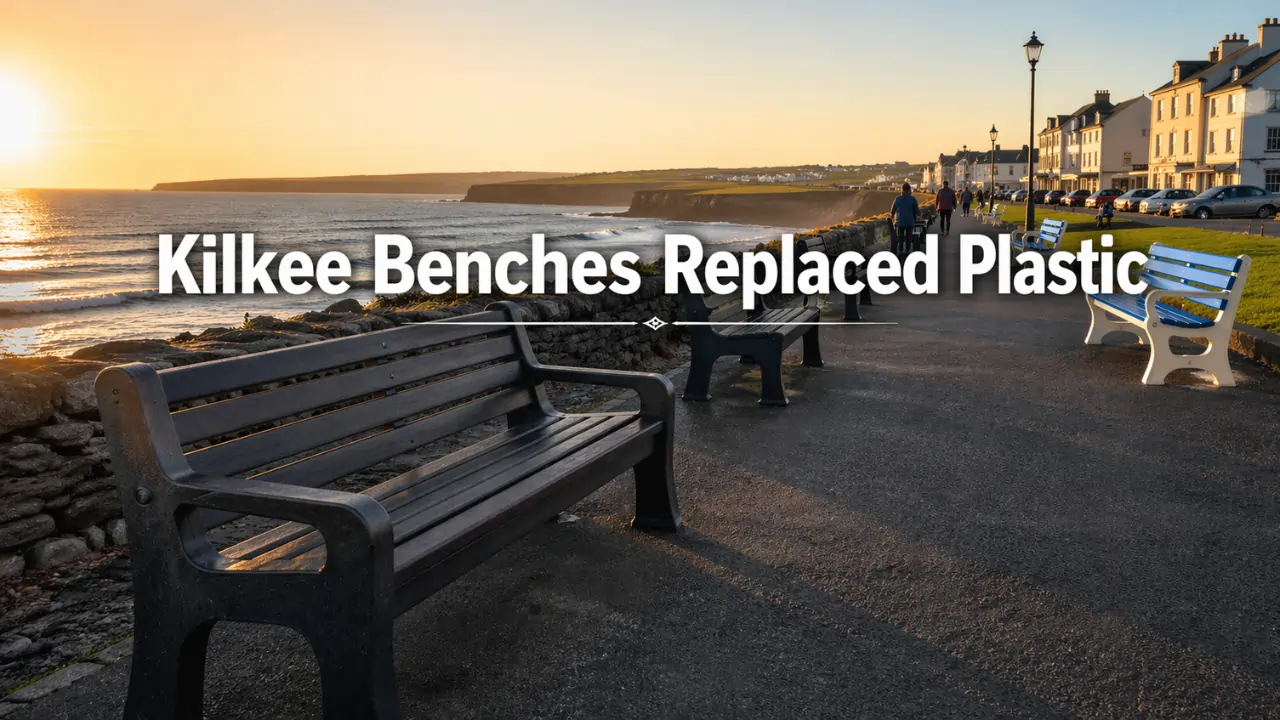
Walk along Kilkee’s seafront before the change, and the experience felt consistent. Blue-and-white benches lined the promenade, subtly matching the coastal palette. They didn’t demand attention. They belonged there.
When kilkee benches replaced plastic, that quiet harmony broke.
The new benches didn’t blend in. They stood out in shape, color, and finish. Instead of complementing the coastline, they interrupted it. For visitors, this might seem minor. For locals, it felt immediate.
That reaction wasn’t exaggerated. Visual continuity matters more than most planners admit.
Why kilkee benches replaced plastic in the first place
There was no random decision here. Kilkee benches replaced plastic because the old structures were failing under pressure—literally.
Coastal exposure forced the issue
Wooden benches don’t last long in harsh coastal conditions. Salt air seeps into materials. Moisture weakens joints. Strong winds accelerate wear. Maintenance becomes constant, and repairs stop being practical after a certain point.
Replacing them wasn’t optional.
Cost and long-term planning
Plastic alternatives offered something wooden benches couldn’t: stability over time. Less maintenance. Fewer repairs. Longer lifespan.
From a budget standpoint, kilkee benches replaced plastic reduced future spending. That alone would justify the move in most towns.
Environmental positioning
There’s also the sustainability angle. Recycled plastic benches align with waste reduction goals. They signal environmental awareness, especially in coastal areas already dealing with pollution concerns.
So the reasoning behind kilkee benches replaced plastic wasn’t flawed. It was incomplete.
Where the decision lost credibility
The issue wasn’t material choice. It was the lack of sensitivity to place.
Kilkee benches replaced plastic without preserving what made the original benches meaningful. That’s where things slipped.
Design ignored context
The old benches had character. Not because they were expensive or rare—but because they fit. Their color reflected local identity. Their style matched the surroundings.
The replacements didn’t carry that forward.
They looked generic. Functional, yes. But disconnected.
And once kilkee benches replaced plastic, that disconnect became impossible to ignore.
No public input
People didn’t get a say. That’s not a small detail—it’s the core problem.
If kilkee benches replaced plastic had gone through even a basic consultation process, the outcome could have been different. Locals would have flagged design concerns early.
Instead, the change appeared fully implemented. Reaction came after, not before.
That’s how frustration builds.
The emotional weight behind ordinary objects
A bench sounds insignificant until it’s removed.
Kilkee benches replaced plastic exposed how attached people were to something most wouldn’t think twice about. But that attachment wasn’t random.
Benches sit at eye level. People interact with them daily. They become part of routines—morning walks, evening views, quiet conversations.
When kilkee benches replaced plastic, it disrupted those familiar patterns.
That’s why the reaction felt personal.
Function worked. Experience didn’t.
It’s important to separate two things here.
Functionally, kilkee benches replaced plastic achieved its goal. The new benches are more durable. They require less maintenance. They’ll likely last longer.
But experience tells a different story.
People don’t measure public spaces in maintenance cycles. They measure them in feeling.
And in that sense, kilkee benches replaced plastic created a downgrade.
The aesthetic gap no one accounted for
Design decisions in small towns carry more weight than in cities. There’s less noise, less distraction. Every element becomes more visible.
That’s why kilkee benches replaced plastic had such a strong impact.
Old vs new contrast
The original benches had a distinct identity:
- Recognizable color scheme
- Consistent placement
- Visual familiarity
The replacements removed all three at once.
That kind of change doesn’t feel gradual. It feels abrupt.
Visibility matters
On a busy street, a bench blends into the background. On a scenic promenade, it becomes part of the view.
Kilkee benches replaced plastic overlooked that difference.
Sustainability without design doesn’t hold up
Using recycled materials sounds responsible. And it is—on paper.
But sustainability fails if people reject the outcome.
Kilkee benches replaced plastic leaned heavily on environmental logic while ignoring user perception. That imbalance weakens the entire effort.
Because real sustainability isn’t just about materials lasting longer. It’s about decisions lasting longer without resistance.
What could have been done differently
This situation wasn’t unavoidable. Kilkee benches replaced plastic could have succeeded with a few adjustments.
Keep the visual identity intact
Plastic doesn’t limit design. The new benches could have mirrored the old color scheme. Even a close approximation would have softened the reaction.
Replace gradually
Switching everything at once made the change more noticeable. A phased replacement would have allowed people to adjust.
Ask first, build later
Even a simple mockup shared with the community could have changed the outcome. Feedback doesn’t delay progress—it improves it.
Kilkee benches replaced plastic skipped that step entirely.
Why this matters beyond Kilkee
This isn’t just a local issue. It’s a pattern.
Towns everywhere are upgrading infrastructure. Materials are changing. Costs are rising. Sustainability pressures are increasing.
That means more situations like kilkee benches replaced plastic are coming.
The lesson isn’t to avoid change. It’s to handle it with awareness.
Because once people feel disconnected from their environment, trust becomes harder to rebuild.
Tourists saw benches. Locals saw a shift
Visitors noticed the new benches, but they didn’t carry the same reaction. For them, kilkee benches replaced plastic was just a detail.
Locals saw something else.
They saw a familiar setting altered without warning. They saw a piece of identity replaced with something generic.
That difference explains the intensity of the response.
And it’s why ignoring local perspective is always a mistake.
The real takeaway from kilkee benches replaced plastic
Kilkee benches replaced plastic proves one thing clearly: small design decisions are never just technical.
They shape how places feel. They influence how people connect to their surroundings. They carry meaning, whether planners acknowledge it or not.
Ignore that, and even a bench becomes controversial.
Respect it, and even necessary changes feel natural.
FAQs
1. Why did people react so strongly to kilkee benches replaced plastic?
Because the change affected the town’s visual identity and happened without consultation, making it feel imposed rather than considered.
2. Are plastic benches actually better than wooden ones in coastal areas?
Yes in terms of durability and maintenance, but design quality determines whether they are accepted.
3. Could the new benches have matched the old style?
Yes, with better design choices. Material doesn’t limit appearance as much as execution does.
4. Was the decision mainly about saving money?
Cost played a role, but long-term maintenance and environmental considerations were also factors.
5. Can this situation still be improved?
Yes. Adjustments in design, color, or layout could shift perception and reduce dissatisfaction.
Read More: Fascisterne: Power, Fear, and the System Behind Absolute Control