









Introduction
People keep underestimating kouskousi because they’ve only experienced the rushed version. The quick-cook bowl, the dry grains, the half-seasoned plate. That’s not where its reputation comes from. Real kouskousi carries weight. It fills the room, not just the plate.
Once you see how it’s built properly, you stop treating it like filler and start treating it like a serious dish.
The real identity of kouskousi in daily life
kouskousi isn’t occasional food. It’s routine. In North African households, it shows up with consistency, especially during weekly gatherings where everyone already knows what’s coming before they sit down.
That predictability is part of its strength.
It’s not flashy. It doesn’t rely on surprise. Instead, kouskousi builds trust through repetition. Families expect it to deliver, and it usually does.
That’s something most modern meals don’t achieve.
Why texture decides everything
Soft does not mean mushy
A lot of people get this wrong. They assume soft kouskousi should feel smooth and heavy. That’s where things collapse.
Proper kouskousi stays light. Each grain should move independently. When you press it, it should fall apart, not stick together.
Steam changes the outcome completely
Traditional preparation uses repeated steaming, and that step is not optional if you care about quality. It allows kouskousi to expand slowly without breaking down.
Fast methods skip this and produce something flatter, both in texture and experience.
If your kouskousi feels dense, it’s already gone in the wrong direction.
The structure of a proper kouskousi plate
kouskousi is not designed to stand alone. It works as a base that absorbs everything placed over it.
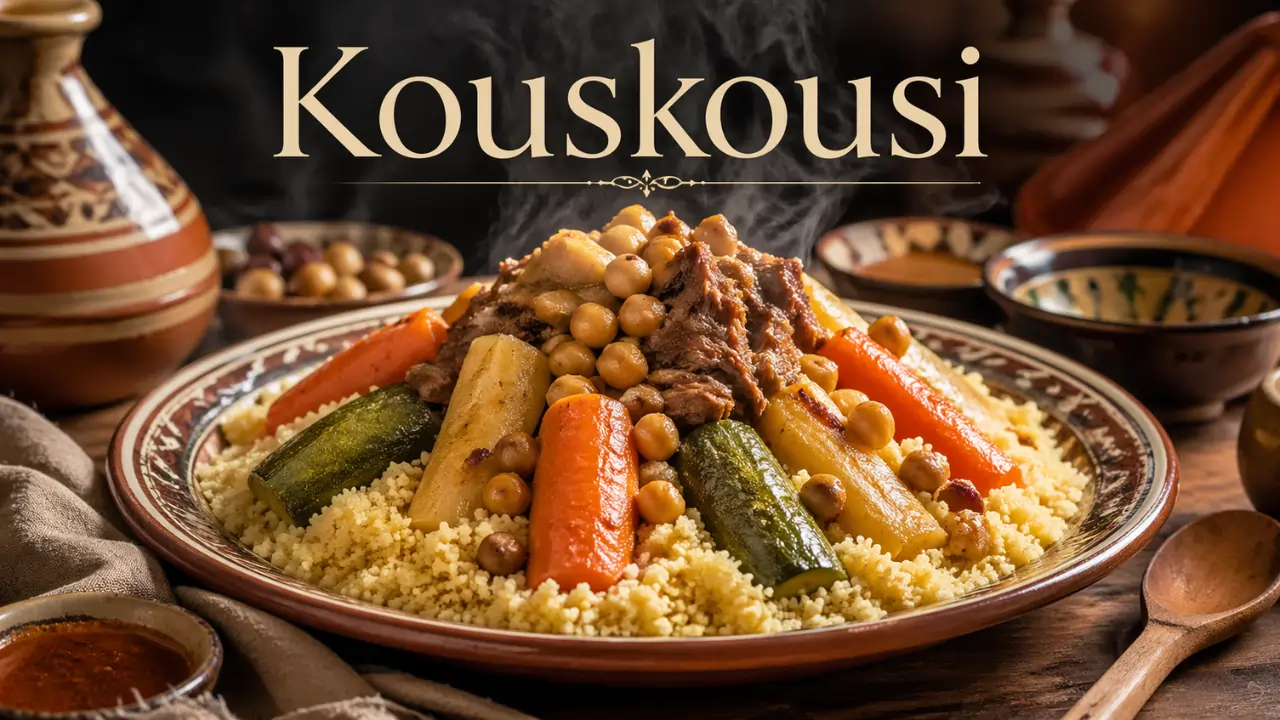
A complete plate usually builds like this:
- A layer of kouskousi as the foundation
- A rich broth that seeps into the grains
- Vegetables that add contrast and volume
- Meat or legumes that bring depth
Take away the broth, and the grains feel dry.
Remove the toppings, and the dish feels empty.
Balance is not optional here. It’s the whole point.
Regional styles that change the entire experience
Moroccan approach
Moroccan kouskousi often leans into a mix of savory and slightly sweet elements. Caramelized onions, spices like cinnamon, and slow-cooked vegetables create a layered profile that builds over time.
It feels rounded and composed.
Algerian approach
Algerian versions tend to push deeper flavors. The broths are stronger, and the seasoning feels more direct. There’s less softness and more intensity.
This version hits harder.
Tunisian approach
Tunisian kouskousi stands out because of heat. Chili-based sauces and bold spice blends give it a sharper edge.
It doesn’t hold back, and that makes it memorable.
Modern shortcuts vs traditional discipline
Convenience made kouskousi easier to access, but it also lowered the standard.
Instant kouskousi cooks in minutes. That’s useful. But it doesn’t build the same texture or depth as slow steaming. You get speed, but you lose character.
Traditional preparation demands attention. You have to monitor moisture, timing, and airflow. It forces you to stay involved.
That difference shows up on the plate.
If you care about results, shortcuts should be occasional, not permanent.
Nutritional reality without exaggeration
kouskousi is often labeled as a healthy option, but it needs context.
It’s primarily a source of carbohydrates, made from durum wheat. That means it provides energy and a moderate amount of protein, but it’s not suitable for gluten-free diets.
Compared to heavier pasta dishes, kouskousi feels lighter and easier to digest. It also cooks faster than rice, which makes it practical for regular meals.
The real nutritional value comes from what you pair with it. Add vegetables, legumes, and balanced protein, and it becomes part of a strong meal. Keep it plain, and it doesn’t offer much on its own.
Why kouskousi adapts so well globally
kouskousi works in different cuisines because it doesn’t fight other flavors. It absorbs them.
That’s why it fits into Mediterranean salads, Western-style side dishes, and even experimental kitchens. Chefs use kouskousi as a base because it carries seasoning without overpowering it.
It’s flexible without losing its identity.
That balance is rare.
Mistakes that instantly downgrade kouskousi
Too much water
This is the fastest way to ruin it. Excess moisture turns kouskousi into clumps. Once that happens, there’s no fixing it.
Skipping the fluffing step
If you don’t separate the grains after cooking, they stick together. The dish becomes heavy and loses its light texture.
Weak seasoning
kouskousi depends on the flavors around it. If the broth is bland, everything feels flat.
Treating it like an afterthought
The biggest mistake is not taking it seriously. If you rush the process, the result shows it.
The difference between basic and memorable kouskousi
Anyone can prepare a basic version. Add hot water, wait a few minutes, and it’s done.
But memorable kouskousi comes from control. You manage texture, you build layers, and you pay attention to how everything connects.
That difference separates something average from something people actually remember.
Where most people misjudge kouskousi
People assume kouskousi is simple, so they don’t invest effort into it. That assumption limits the result.
When done properly, kouskousi can carry an entire meal without needing support. It doesn’t have to sit on the side.
The problem isn’t capability. It’s how people approach it.
Final takeaway
kouskousi reflects how much effort you’re willing to put into your food. Rush it, and it stays forgettable. Handle it properly, and it becomes something people look forward to.
There’s no middle ground.
FAQs
1. Why does my kouskousi always turn into lumps?
You’re likely adding too much water or skipping the fluffing step. Both cause the grains to stick together.
2. Can I make kouskousi without traditional steaming equipment?
Yes, but the texture will not be the same. Steaming builds a lighter, more separated grain structure.
3. What’s the fastest way to improve kouskousi flavor?
Use a strong, well-seasoned broth instead of plain water. That alone changes the entire dish.
4. Is kouskousi good for everyday meals?
It works well because it cooks quickly and pairs easily with vegetables and protein, making it practical for regular use.
5. How do I store leftover kouskousi without ruining it?
Keep it slightly undercooked before storing, and fluff it again when reheating to maintain texture.
Read More: Gillingham Shopping Center Emergency: Real Incidents and Safety Risks Exposed