










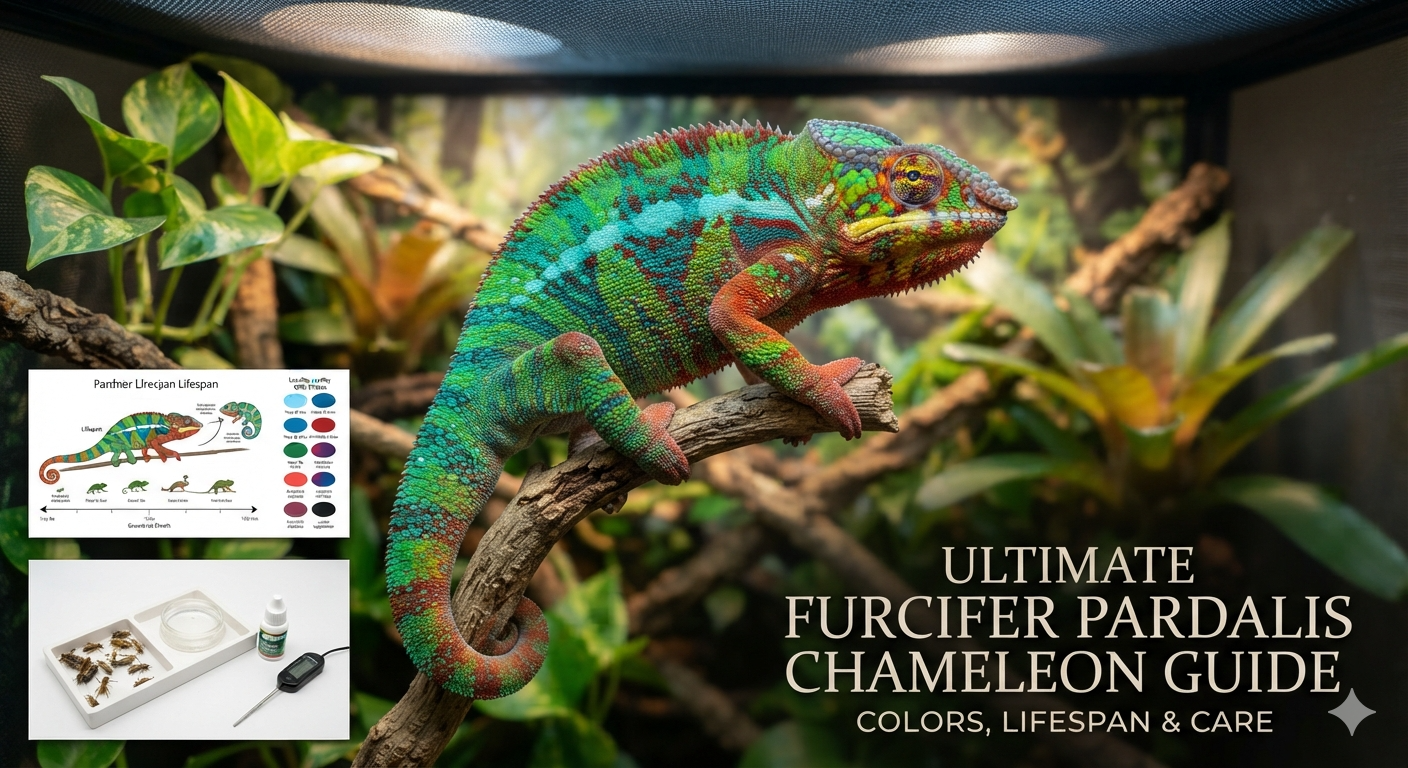
If you have ever wanted a pet that looks like a living box of crayons, meet the furcifer pardalis chameleon. Most people call them panther chameleons. They are some of the most colorful, fascinating creatures on our planet! Watching a furcifer pardalis chameleon slowly move across a branch is like watching magic happen right before your eyes.
Keeping a furcifer pardalis chameleon as a pet is an amazing journey, but it takes some special work. They are not like normal pets such as dogs or cats. They need exact temperatures, special lights, and a lot of bugs to eat. In this guide, we will break down everything you need to know about this spectacular reptile in a simple, easy way.
The Ultimate Chameleon Biography
To understand the furcifer pardalis chameleon, it helps to look at its basic facts all at once. These creatures come from a very special place and have unique traits that help them survive.
| Feature | Details |
| Scientific Name | Furcifer pardalis |
| Common Name | Panther Chameleon |
| Native Home | Madagascar |
| Adult Male Size | 14 to 20 inches long |
| Adult Female Size | 8 to 14 inches long |
| Male Lifespan | 5 to 8 years in captivity |
| Female Lifespan | 3 to 5 years in captivity |
| Primary Diet | Live insects (Insectivore) |
Where Does the Furcifer Pardalis Chameleon Live?
The furcifer pardalis chameleon comes from the tropical island of Madagascar, which sits off the coast of Africa. In the wild, they love to live in warm, humid coastal areas where there are plenty of bushes and trees. They spend almost their whole lives up off the ground.
Interestingly, a furcifer pardalis chameleon does not like deep, dark forests. They prefer open spaces with lots of sunlight, like the edges of roads and fields. This helps them soak up the sun to warm up their bodies each morning.
Understanding the Amazing Shifting Colors
The most famous thing about the furcifer pardalis chameleon is its ability to display bright, beautiful colors. Many people think they change colors to blend into their background, but that is actually a myth! A furcifer pardalis chameleon changes color based on its mood, temperature, and talking to other chameleons.
When a male furcifer pardalis chameleon wants to show off or defend his spot, he flashes brilliant reds, yellows, and blues. If he gets too cold, he might turn a dark, dull brown color to absorb more heat from his basking light.
The Curious Case of Chameleons and Forbes Connections
You might wonder how a reptile connects to big names or business topics like Forbes lists. While the furcifer pardalis chameleon lives in the jungle, its stunning beauty has made it a star in the media world. Many high-profile photographers and exotic pet innovators have featured these reptiles in luxury lifestyle pieces.
True success with a furcifer pardalis chameleon requires the same dedication as building a top-tier business venture. It takes careful planning, investing in the right equipment, and keeping a strict daily schedule. When you give them the best care, your beautiful lizard becomes a living centerpiece that surprises everyone who visits.
Male vs Female Panther Chameleons
There is a huge difference between male and female furcifer pardalis chameleon lizards. Males are the real showstoppers when it comes to bright, flashy colors. They get much bigger than females and can live significantly longer.
Female furcifer pardalis chameleon pets are usually smaller and have softer colors like peach, pink, or light brown. Even though they are less flashy, females are incredibly sweet and fun to watch. However, females have shorter lives because laying eggs takes a lot of energy out of their bodies.
Setting Up the Perfect Screen Enclosure
Because a furcifer pardalis chameleon comes from a tropical place, you must build them a perfect home. Do not use a regular glass fish tank for an adult chameleon. They need a tall cage made of mesh or screen so fresh air can constantly flow through it.
An adult furcifer pardalis chameleon needs a cage that is at least 24 inches wide and 48 inches tall. Inside the cage, you should pile up lots of safe, real plants and branches. This gives your lizard plenty of paths to climb on and secret spots to hide when they want to take a nap.
Lighting Rules for a Healthy Reptile
Your furcifer pardalis chameleon needs two types of artificial sunbeams to stay healthy in their indoor home. First, they need a heat bulb to create a warm basking spot. This spot should reach about 85 to 90 degrees Fahrenheit so they can digest their food properly.
Second, they absolutely must have a special UVB light strip. Without a UVB light, a furcifer pardalis chameleon cannot absorb calcium into its bones. If they miss out on this light, their bones will become soft and weak, which is a dangerous sickness called Metabolic Bone Disease.
Misting and Keeping the Air Humid
Water is super important for a furcifer pardalis chameleon, but they do not drink out of a regular water bowl. In the wild, they lap up dew drops off leaves. To mimic this, you need to spray the inside of their cage with clean water two or three times every day.
You can also buy an automatic misting machine to do the heavy spraying work for you. The air humidity inside the cage should stay between 50% and 70%. Always make sure the cage dries out completely between mistings so bad bacteria cannot grow on the wet floor.
Feeding Your Hungry Insectivore
A furcifer pardalis chameleon only wants to eat moving, live bugs. Their absolute favorite meals are crunchy crickets and active Dubia roaches. You can also give them green hornworms or soft silkworms as a special snack once in a while.
Before you feed the bugs to your furcifer pardalis chameleon, you must feed the bugs healthy food first. This trick is called “gut-loading”. You should also dust the insects with a tiny bit of pure calcium powder right before dinner time to keep your lizard strong.
How Long Do They Live?
In the wild jungles, a furcifer pardalis chameleon usually only lives for one or two years because of predators and weather. But inside a safe home with great care, they can live much longer! A healthy male can easily live between 5 and 8 years.
To give your furcifer pardalis chameleon the longest life possible, you must keep their stress very low. Never put two chameleons in the same cage, because they will fight and get sick from stress. Keep their environment clean and watch their behavior closely every single day.
The Incredible Sticky Hunting Tongue
Watching a furcifer pardalis chameleon hunt is one of the coolest things you will ever see! They have a powerful tongue that can stretch out longer than their entire body. They sit completely still, look at a bug with their independent eyes, and blast their tongue out like a rocket.
The tip of the tongue is super sticky and acts like a small suction cup. It grabs the bug in less than a blink of an eye and pulls it right into the chameleon’s mouth. It is a highly efficient hunting tool that never fails to amaze anyone watching.
Finding a Healthy Chameleon Friend
If you are ready to bring a furcifer pardalis chameleon into your home, always buy from a trusted, high-quality reptile breeder. Never buy wild-caught lizards, as they usually have parasites and are heavily stressed out. A captive-bred baby chameleon will be much healthier, friendlier, and easier to care for.
Look for a baby that has bright, clear eyes and straight legs when it walks. A healthy little furcifer pardalis chameleon should be curious about its surroundings and grip your fingers tightly with its unique, split feet.
Conclusion
The furcifer pardalis chameleon is an absolutely breathtaking pet that brings a slice of the Madagascar rainforest right into your living room. They require specialized gear, daily misting, and a steady supply of live bugs, but the reward of watching their colors shift is worth every bit of effort.
If you are willing to set up the right environment, this spectacular reptile will be a source of joy for many years. Do you have any questions about setting up your first enclosure? Drop a comment below, share your thoughts, and let us know what color locale is your absolute favorite!
Frequently Asked Question
Can I hold my furcifer pardalis chameleon every day?
It is best not to handle them too much. They are pets meant for watching rather than playing with. Holding them too often can scare them and cause unwanted health issues from chronic stress.
Why is my chameleon keeping its mouth wide open?
When a chameleon holds its mouth open, it is called gaping. This usually means they are too hot and are trying to cool down, or they are feeling scared and are trying to look big and tough to protect themselves.
Do they need a water dish inside the cage?
No, they do not need a water dish. They do not recognize standing water and will likely ignore it. They only drink water droplets that are dripping off living green leaves after you mist the enclosure.
Can two panthers live together peacefully?
No, they cannot. They are strictly solitary animals who hate to share their space. Putting two of them in one cage will lead to fierce fighting, severe injuries, or extreme stress.
What should I do if my female chameleon lays eggs?
Even if a female has never been around a male, she can still lay infertile eggs. You must provide a deep bucket filled with moist sand or soil inside her cage so she can safely dig a tunnel to lay them.
How fast can their tongues shoot out?
Their tongue is incredibly fast! It can blast out of their mouth and grab a bug in about one-hundredth of a second, moving at speeds that are hard for human eyes to track without a slow-motion camera.